In September 2026, BRIGHTskills participated in the NHPiG1 Conference, bringing a workforce and skills perspective to discussions on the future of non-clinical innovation and alternative testing approaches within the health industry ecosystem.
Representing EIT Health and the BRIGHTskills project, Claire Nassiet delivered a keynote presentation exploring a simple but important question:
If innovative projects succeed in developing new methodologies and generating new forms of evidence, do organisations have the workforce capabilities required to adopt and implement them?
Across Europe’s health industry, advances in AI, data analytics and alternative testing methods are creating new opportunities for research and development. However, translating these advances into practice requires organisations to navigate evolving regulatory frameworks, validate new approaches and equip professionals with the necessary skills.
The transition towards alternatives to animal testing illustrates this challenge. As explored in IEEE Spectrum’s article, “Alternatives to Animal Testing Are Finally Taking Off”, methods such as organ-on-a-chip systems, organoids and computational models offer new possibilities, but their wider adoption also depends on professional training, regulatory acceptance and changes to established scientific practices.
BioTalentum, as a partner in both the NHPiG and BRIGHTskills consortia, provides a natural link between the two initiatives, highlighting the importance of connecting scientific innovation with the skills and capabilities needed to support its adoption across the health industry.
Scientists, regulatory specialists, digital experts and innovation managers must therefore work across disciplines to help integrate emerging methods into research and development.
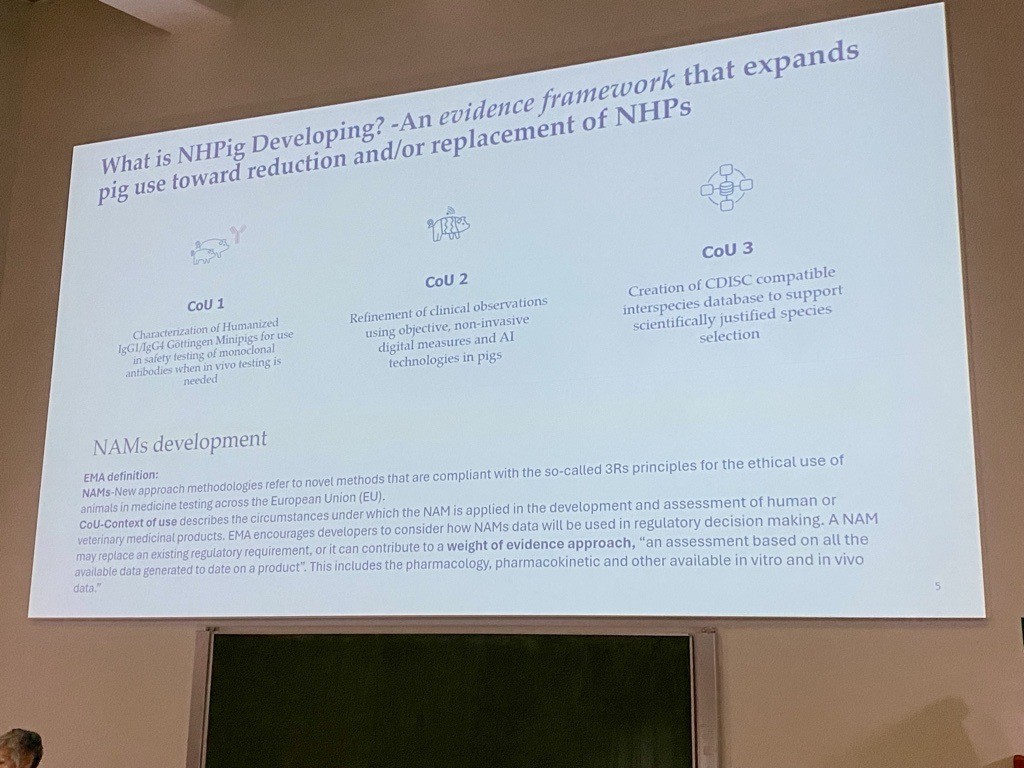
The keynote connected these challenges with emerging insights from BRIGHTskills skills intelligence activities, drawing on surveys, interviews, focus groups and literature analysis across the European health industry ecosystem.
The findings point to growing demand for a combination of technical, regulatory and organisational capabilities, including:
The growing intersection between AI and regulation is particularly significant. Professionals increasingly need to understand how AI-enabled technologies work while also evaluating their outputs, addressing governance and compliance requirements, and supporting responsible implementation.
These trends highlight the importance of combining technical expertise with adaptability, cross-disciplinary collaboration and the ability to apply new knowledge in complex organisational settings.
BRIGHTskills addresses these emerging needs by connecting skills intelligence with practical workforce development.
Through its Future Skills Observatory activities, targeted training development and collaboration with industry, education and policy stakeholders, the project works to identify evolving competency requirements and support the development of relevant learning opportunities within the health industry ecosystem.
While initiatives such as NHPiG advance scientific knowledge and innovative approaches, BRIGHTskills focuses on the complementary challenge of preparing people and healthcare companies to adopt these developments successfully.
The conference also created opportunities to exchange perspectives with stakeholders from pharmaceutical research, regulatory affairs and innovation organisations, opening avenues for further dialogue and collaboration through BRIGHTskills and the Skills Partnership for the European Health Industry.
As technological and regulatory change accelerates, workforce readiness remains essential to successful innovation adoption. BRIGHTskills will continue working with industry, education and policy stakeholders to help ensure Europe has the skills needed to translate scientific breakthroughs into sustainable impact.
Because ultimately, scientific innovation creates possibilities. Workforce capability creates impact.
1NHPiG - Reducing on-Human Primates in Non-Clinical Safety Assessment: The European Initiative on Minipig and Micropig Models