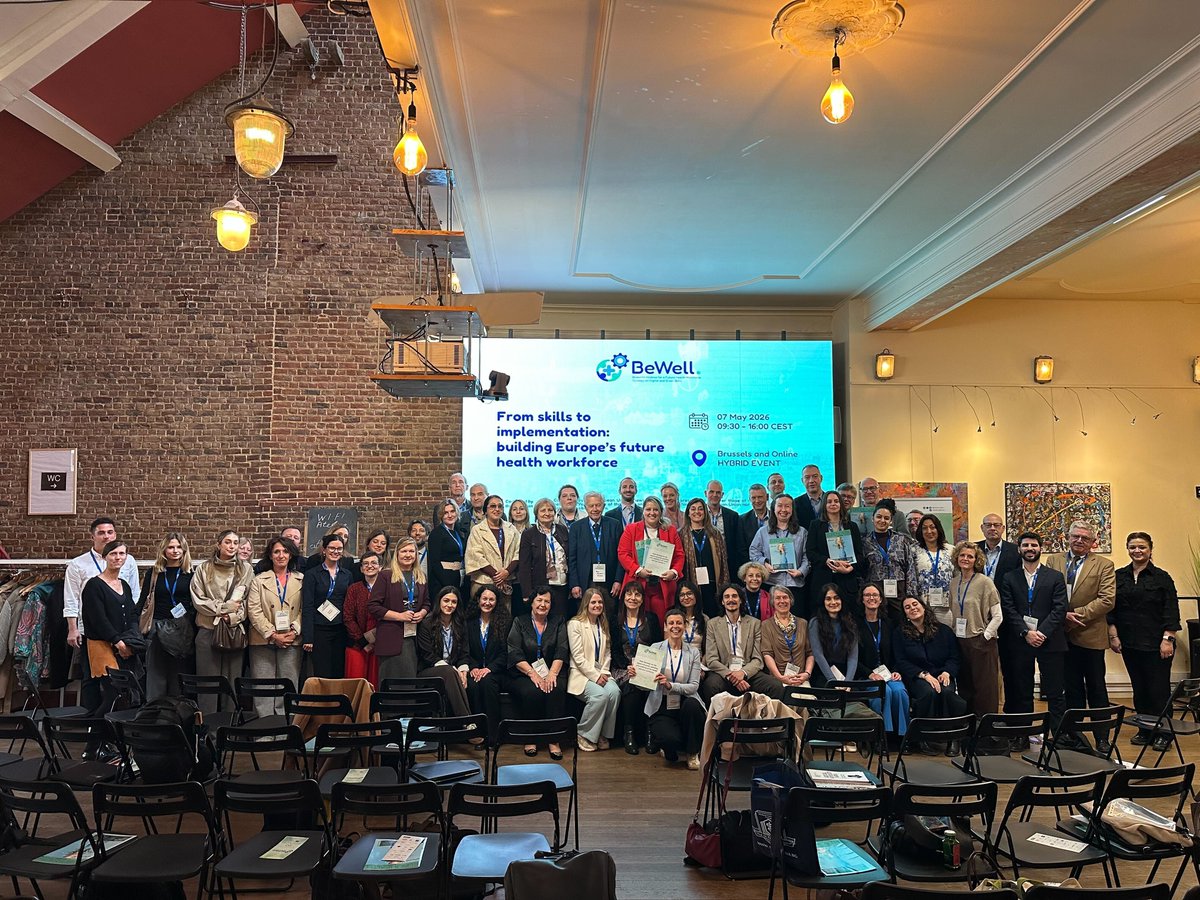
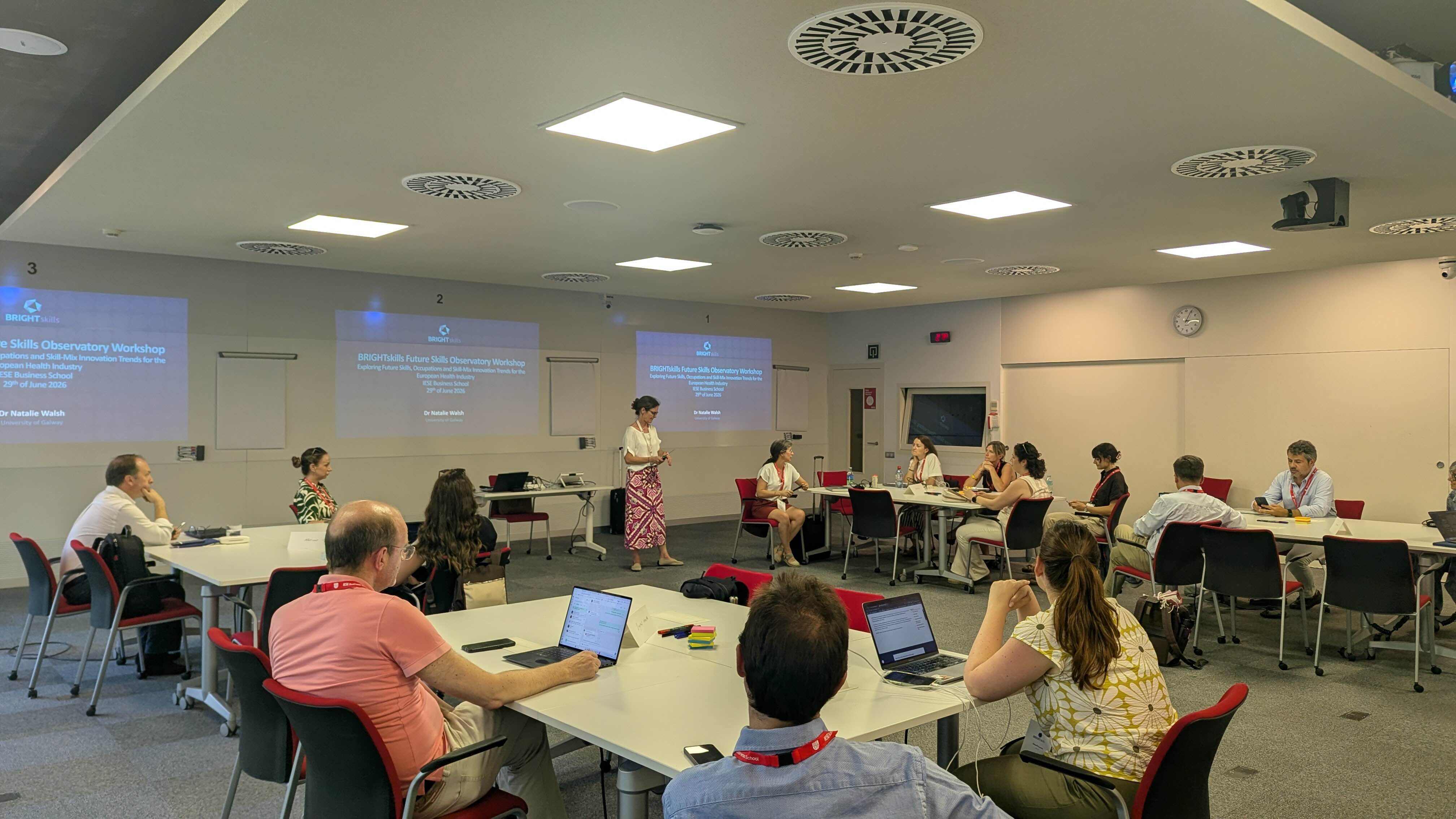
On 7 May 2026, stakeholders from across Europe gathered in Brussels for the final conference of the BeWell Project, marking the culmination of four years of collaborative work dedicated to strengthening the skills of Europe’s health and care workforce.
Held alongside the Large-Scale Partnership (LSP) meeting, the conference highlighted the importance of long-term cooperation across sectors and initiatives to support sustainable progress within the European health ecosystem. Throughout the discussions, one message remained clear: collaboration and knowledge exchange are essential to addressing the complex challenges facing healthcare systems across Europe.
Throughout the day, discussions highlighted the growing urgency of equipping healthcare professionals with the competences needed to navigate an increasingly complex healthcare landscape.
The conference discussions also reflected many of the same objectives that are central to the BRIGHTskills agenda, particularly the need to create sustainable and practical pathways for lifelong learning and continues professional development in health industry.
Several key priorities emerged from the discussions that are also central to BRIGHTskills:
Participants also acknowledged that workforce shortages, burnout, and time constraints continue to create barriers to continuous learning across the health sector. In this context, European initiatives such as BRIGHTskills play an important role in connecting policy, education, healthcare companies, research, and industry stakeholders.
A dedicated session titled “Skills initiatives across Europe: projects in action” showcased several European projects contributing to the transformation of health workforce education and training, including AMR-EDUCare, H-PASS, JA HEROES, XiA, and BRIGHTskills Consortium.
Claire Nassiet, representing EIT Health as a project coordinator within the BRIGHTskills consortium, presented the BRIGHTskills project and its contribution to strengthening skills development across the European health industry ecosystem. Her presentation highlighted the importance of cooperation to address shared workforce challenges and support the future readiness of health industry.

The session also illustrated the value of learning from one another. By exchanging experiences, methodologies, and best practices, European projects can accelerate progress and build stronger connections between education, innovation, and healthcare delivery.
One of the most significant milestones of the BeWell Project is the release of the Skills Strategy for the Digital and Green Upskilling and Reskilling of the Health and Care Workforce. Developed through a multi-year consultation process involving 765 stakeholders across Europe, the strategy provides a coordinated framework to strengthen digital, green, and core competences across the health and care sector.
Building on this momentum, the BRIGHTskills Consortium is also contributing to the development of the EU health industry skills strategy which will be released later this year. Through its activities and collaboration with European stakeholders, the consortium is helping shape future approaches to workforce preparedness, innovation, sustainability, and lifelong learning within the health industry.
While the BeWell project officially comes to a close, the discussions initiated during the final conference and LSP meeting clearly continue beyond the project’s lifespan.
One of the strongest messages emerging from the event was that Europe already understands many of the skills its health workforce will require in the future. The remaining challenge is to build realistic, scalable, and inclusive pathways that make those skills accessible in practice.
By contributing to this shared effort, BRIGHTskills helps turn strategic objectives into concrete action, supporting a more resilient, innovative, and future-ready European health industry workforce.