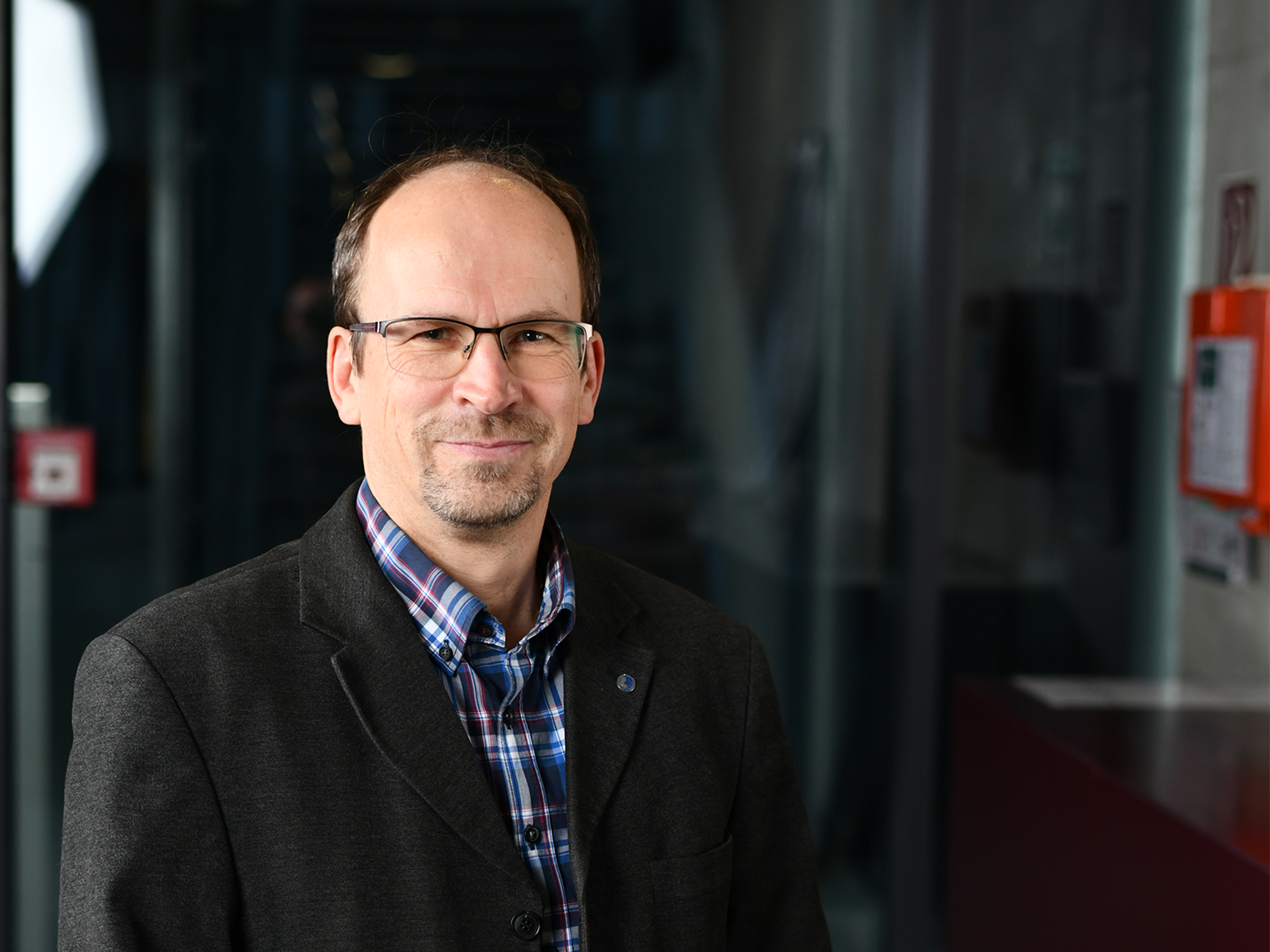
In the second of two interview articles showcasing BRIGHTskills partners expertise for building effective and tailored learning programmes tackling health care companies’ urgent skills needs, Work Stream Leader, Prof Jens Hartmann, Head of Department for Biomedical Research, Universität fur Weiterbildung Krems, Austria discusses how his work and expertise is contributing to the soon to be released BRIGHTskills training courses.
Among other things, aging population, chronic diseases and budget constraints are the biggest challenges we will face or are already facing. While often overlooked, this leads to enormous financial and personnel pressure on the health industry. We need, therefore, innovative therapies as well as innovative pharmaceutical and medical products. To offer such products, we need innovative thinkers. It is crucial for managers in pharmaceutical and medical organisations to gain an in-depth understanding and knowledge of value creation. With the BRIGHTskills project, we want to do our part to help.
Our research in this area is still ongoing, but in my opinion, quality and supply chain management, regulatory affairs, entrepreneurship, and intellectual properties management are among them. These and certainly several other skill gaps need to be closed as quickly as possible so that Europe can remain competitive with other continents.
The identification of needs is based primarily on our experience from the MBA Biotech, Pharma & MedTech Management program, which we constantly adapt to the current needs of the market. We have an excellent network of international specialists in these fields, who also serve as lecturers in our courses.
We are in close contact with some of our speakers, who are all specialists in the industry. And, of course, we also listen to feedback from our participants, many of whom have more than 20 years of professional experience and know exactly what they need. At the same time, the project naturally includes an entire work package that focuses precisely on this question of which topics are important now and will be important in the near future. We will also draw important insights from this and incorporate them into our courses.
We developed four courses so far: Regulations, Future Female Founders, Quality- and supply chain management, and Healthcare Markets. The latter is still being worked on.
We have been aware of the importance of supply chain management since the pandemic, when we experienced significant shortages in many areas of medical care and analytics. However, this topic remains highly relevant even after the pandemic. As part of the course, we teach students to better understand the complex interrelationships within value chains and to recognise and assess the underlying processes.
The same applies to quality management and regulations. The medical technology sector is fast-moving. There are products on the market today that would not pass re-approval due to new, stricter quality and regulatory requirements. Anyone responsible for the relevant processes within the value chain who is not up to date will not be successful. As part of our courses, we give participants an in-depth insight into quality management systems, particularly those developed in the Far East, especially in Japan, where they show us how it's done.
The first pilot courses will be offered exclusively on-site, meaning that lecturers and participants will come to us at the University for Continuing Education Krems. Subsequently, however, the courses will be offered online and thus be available to the entire European market.
The training courses are free of charge as part of the project and will be accessible via the BRIGHTskills project website. We are still finalising the format for the online version, but it will likely include a combination of live sessions and materials that can be accessed on your own schedule. After completing an entire course, each participant receives a certificate.
The individual courses will be advertised on various social media platforms and other channels.
The entire program is divided into 8-10 thematic blocks. Each thematic block is covered in one course.
The courses are offered in relatively small, short teaching units and can therefore be completed alongside work. We will initially offer some courses in person to gain valuable experience with the format and participant interaction. Based on these experiences, we plan to offer the courses online as well, allowing us to reach a broader audience while maintaining the quality of learning and engagement. Each course deals with a self-contained topic, such as supply chain management or regulations. Each course is divided into individual sessions, each lasting approximately 1-2 hours. We will offer each course several times and fine-tune the content based on participant feedback. In other words, “Plan-Do-Check-Act,” just as we teach the participants in our courses.
In recent years, there has been a shift from very extensive, relatively long-term programs to shorter programs. These offer participants the greatest possible flexibility, and in the academic field in particular, the so-called stackability allows each participant to put together a program that is ideally tailored to their needs. In other words, in modern professional education, “stackability” refers to structuring learning into smaller, modular units that can be combined over time. This approach allows learners to build a personalized program tailored to their individual needs and goals. Many small units come together to create the bigger picture, giving each participant a flexible and highly customized learning experience. The strategy chosen as part of the BRIGHTskills project fits in perfectly with this trend.
When I was still a student, one of my former professors—who, like me, was a biologist—often said: "Life is a process of gaining knowledge."
Support this process through active, lifelong learning to keep yourself up to date and remain competitive—both personally and professionally! “He who does not move with the times, will be removed over time”.